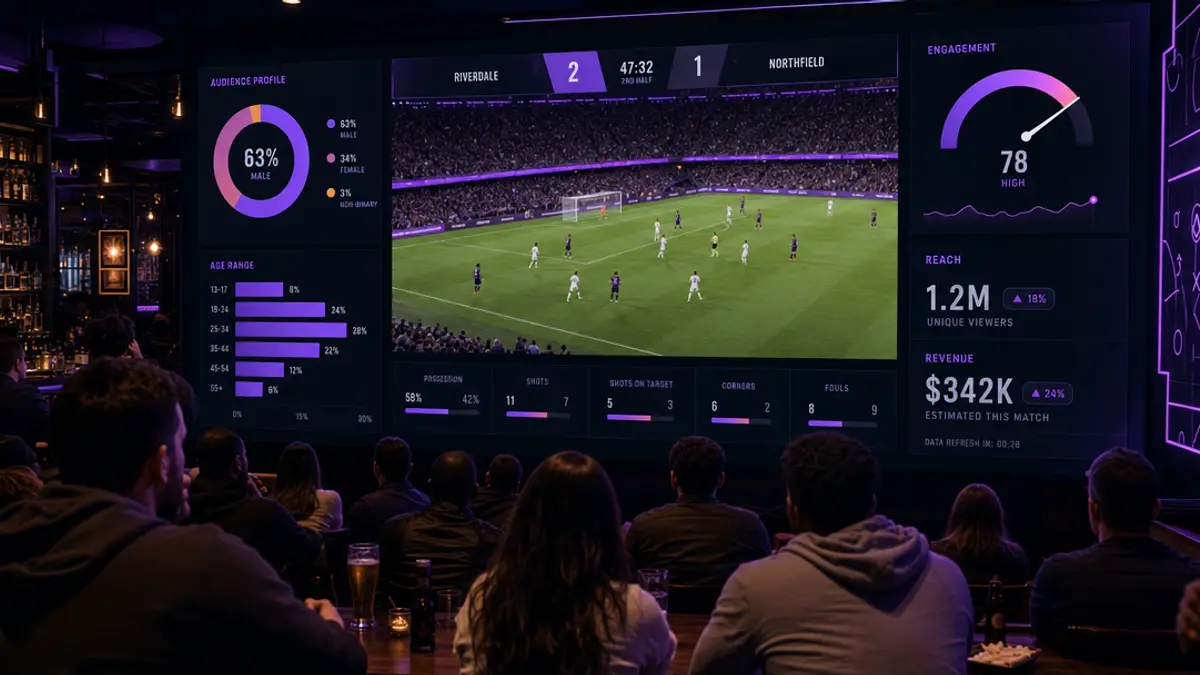
The U.S. bar and restaurant business is enormous, live sports is one of its strongest demand drivers, and the crowd that gathers to watch is exactly the out-of-home audience advertisers struggle to reach. There were 714,532 food service and drinking establishments in the country in 2023, the category sells around $101 billion a month, and on a single big-game Sunday, 18.2 million Americans plan to watch at a bar or restaurant. This report pulls the public data together for both sides of the screen: the advertisers who want to reach that room, and the operators who run it.
How big is the bar and restaurant industry?
It is one of the largest consumer categories in the country. The U.S. Census Bureau counted 714,532 employer establishments in food services and drinking places in 2023, including 40,835 dedicated drinking places. (U.S. Census Bureau) The sector employs about 12.44 million people. (BLS via FRED)
The spending is just as large. U.S. eating and drinking places sold roughly $101 billion in a single month in 2026. (National Restaurant Association) Within that, IBISWorld pegs the bars and nightclubs industry at about $39 billion a year. (IBISWorld estimate)
What does live sports do to a venue on game day?
It fills the room and lifts the check. A Technomic study commissioned by Joe Hand Promotions found that venues showing high-profile sporting events see an average 21% increase in unit-level sales and a 15% increase in visitors, and that 82% of customers are likely to spend more when their favorite game is on. (Joe Hand Promotions / Technomic)
Operators see it too: 49% say showing sports increases how long customers stay. (Joe Hand Promotions / Technomic) Industry-wide, big sporting events are among the occasions that concentrate the most spend: the ten most valuable on-premise days of 2024 captured a larger share of annual sales than they did in 2023. (NIQ)
Where does the out-of-home sports audience gather?
In bars and restaurants, by the millions. For the most recent Super Bowl, 18.2 million U.S. adults planned to watch at a bar or restaurant, part of $20.2 billion in total planned spending around the game. (NRF / Prosper Insights) Game-watching is now a distinct dine-in occasion: Morning Consult found that “watching a sporting event” is the clearest occasion driver in casual dining. (Morning Consult)
That is the audience home TV measurement has always undercounted, and it is the audience in-venue advertising is built to reach.
How often do people go out, and what do they spend?
Frequently, and on premium drinks. In NIQ’s U.S. on-premise analysis, 83% of on-premise users typically visit casual dining restaurants and 71% of them do so at least weekly; 53% visit neighborhood bars, and 66% of those visitors go weekly. (NIQ / CGA) Premium spirits made up 35.6% of spirits sales by volume in bars, clubs, and restaurants in the year to mid-2025, as drinkers traded up. (NIQ)
The screen sits right at the point of that decision. Cocktail sales peak between 6 p.m. and 10 p.m. and lead on Fridays and Saturdays, the same windows that fill with live sports. (NIQ)
Who is in the sports bar, and how is that changing?
The core is young and male-skewing, but the audience is broadening fast. A Statista-reported survey found 44% of men versus 15% of women identified as avid sports fans, and brand research shows the sports-bar core skews to adults 18 to 34. (Statista)
The growth, though, is in women’s sports. Americans consumed 46 billion minutes of women’s sports in 2025, and the audiences are climbing sharply.
For both advertisers and operators, that means the room on game day is no longer a single narrow demographic. (Nielsen)
Is the industry growing?
It is growing in outlets and shifting in shape. NIQ found that over the last two years, neighborhood bar site counts grew 3.7% and casual dining grew 2.3%, while fine dining fell 9.8%. (NIQ / CGA) Consumer spending at restaurants rose 2% in 2024, a fourth straight year of growth. (Circana)
The pressure is real, though. Eating and drinking sales were up 2.7% year over year in nominal terms but down 0.9% adjusted for inflation, and value-menu traffic is outgrowing the overall market. (National Restaurant Association) In that environment, operators are leaning on the levers that reliably drive traffic, and live sports is near the top of the list.
What does this mean for advertisers?
It means the out-of-home sports audience is large, attentive, and concentrated in venues you can buy. The same crowd that scatters across streaming apps at home gathers on the same screens at the same time, in a setting that lifts attention: in-venue viewers show 45% greater ad receptiveness than at-home TV viewers, and the average visit lasts 82 minutes. Taiv’s network reaches 30 million monthly customers across more than 6,000 venues and delivers over 5.2 billion monthly impressions. For the full picture, read the Complete Guide to Live Sports Advertising and what in-venue advertising is.
What does this mean for venue operators?
It means your screens are a revenue lever, not just a way to keep the game on. Live sports already lifts your sales and keeps customers in their seats; the screens between the action can promote your own specials, and with the right setup they can pay you back through ad revenue share. See how to increase bar revenue with your existing TVs.
The sports bar is one of the country’s biggest consumer venues, live sports is its engine, and the crowd it gathers is the out-of-home audience brands keep missing. To reach that room, explore advertising with Taiv; to put your own screens to work, see Taiv for venues. Any term above is defined in the glossary.
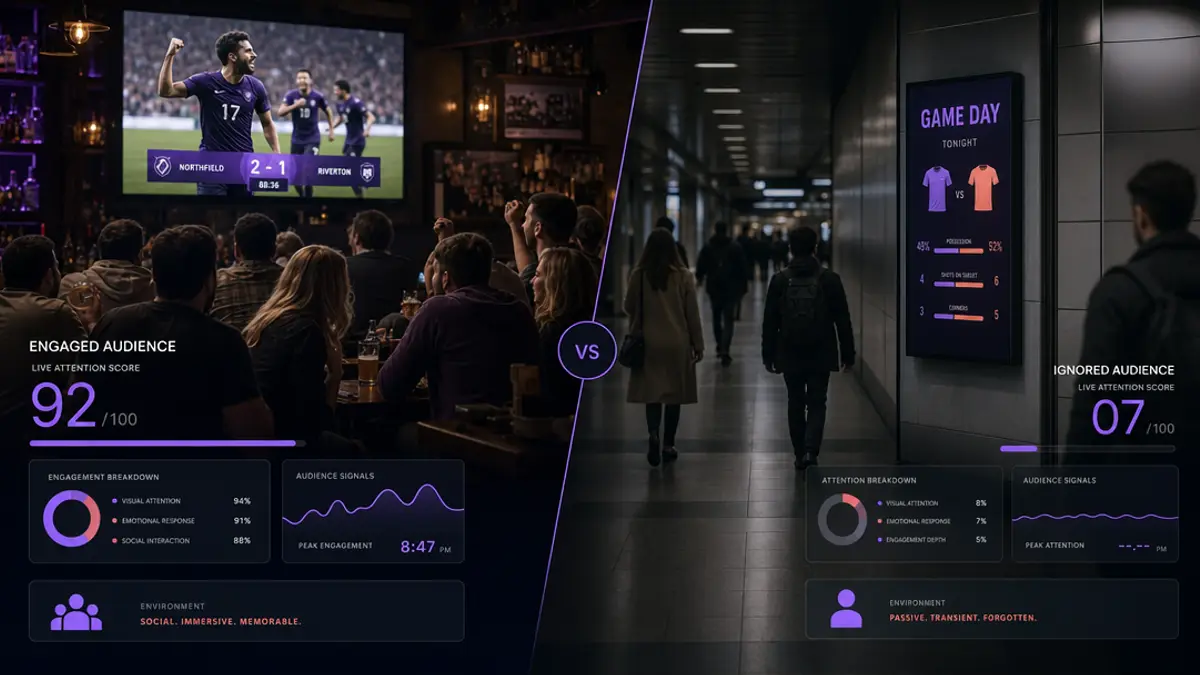
Two sides of the same screen.
Venues take control of their TVs, run their own promos, and earn from every break. Brands reach real crowds during the games that matter. Whichever side you are on, Taiv is how the screen pays off.